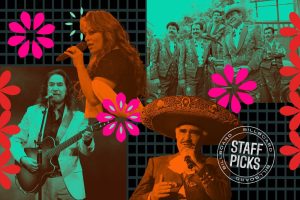
Over the past five years, regional Mexican music has once again caught fire within our industry, thanks to a new generation of Mexican and Mexican American hitmakers who’ve taken the historic genre into the future. Artists like Peso Pluma, Grupo Frontera, Natanael Cano and Fuerza Regida have struck the perfect balance between honoring tradition and embracing the decades-old genre’s experimental essence, catapulting música mexicana to global popularity. But those artists didn’t reach the summit on their own. Far from it. They may be the new generation and the face of the genre today, but the foundations of regional Mexican – an umbrella term comprising banda, corridos, norteño, sierreño, mariachi and more subgenres – lead back decades, to pioneering greats like Pedro Infante, Vicente Fernández, Lucha Villa, Antonio Aguilar, Chalino Sánchez and Los Tigres del Norte. Latin’s growth in the first six months of the year has been largely fueled by regional Mexican music – the subgenre with the second highest growth rate in terms of volume, behind only alt rock – according to Luminate’s midyear report. So, given regional Mexican music’s ever-growing popularity today, it’s only fitting that we give you our staff’s picks for the 75 Best Regional Mexican Acts of All Time, saluting the pioneers for laying the groundwork while acknowledging some of those that represent the eclectic new class. For this list, Billboard staffers agreed on the following criteria: vocal prowess, body of work, career longevity, industry achievements, Billboard chart accomplishments, game-changing influence and enduring generational/cultural impact. While it was taken into consideration, songwriting was not a major deciding factor. Furthermore, música mexicana is comprised by legendary singers, but groups and bands are a major part of the genre’s narrative and fabric, which is why we decided to include those bands who’ve made and continue to make strides in the genre. (Editor’s note: Artists from the subgenre son jarocho were not included, for the purpose of tightening the list.) We ask that you keep in mind that this is a carefully curated, thoughtfully assembled list – believe us when we say this has been a back-and-forth, months-long discussion, with heated conversations. And we understand you may or may not agree with the names included or left out, or the positioning of those included. However, we firmly believe every name on this list is deserving of the honor. We look forward to hearing our readers’ feedback, and to the cultural discussions this list will ignite. At the end of the day, this is all about celebrating regional Mexican music: the genre’s past, present and future. Another thing: You’ll notice that many from the new generation of música mexicana artists are not included in this big list. As we said above, longevity and a sizable body of work matter in this particular selection. Rest assured, we’re working on a separate list for members of the new generation, who we think will eventually join the ranks of GOATs. Coinciding with Hispanic Heritage Month, and launching on Mexican Independence Day, below find Nos. 75-61 on the list. Billboard will be unveiling a new round every week until the final 15. 75. Los Panchos This legendary trio, founded in 1944 by Mexicans Alfredo Gil and Chucho Navarro, and Puerto Rican Hernando Avilés in New York, achieved worldwide fame by integrating vocal harmonies and guitar, an instrument that became central to their sound. Los Panchos’ initial repertoire was based on Mexican ranchera songs, huapango and son huasteco. The group’s interpretive style quickly took the entire continent by storm and helped popularize the bolero internationally, with its fusion of classic bolero and Latin music influences. Los Panchos’ catalog consists of more than 200 albums, and the artists the trio collaborated with include Eydie Gormé, Julio Iglesias, Pedro Infante, Lucho Gatica, Johnny Albino and María Martha Serra Lima, becoming an emblem of the musical romanticism of that era in Mexico. — NATALIA CANO 74. Chuy Lizárraga One of the most potent voices in banda music, Lizárraga was part of regional Mexican powerhouses La Adictiva and La Original Banda El Limón before embarking on a solo career in 2005. His versatility and powerful vocal range has powered love songs that he performs with pathos, rancheras that reflect his love for horses and the rancho, and witty songs that he imbues with his distinctive good humor and mischievousness. — TERE AGUILERA 73. Priscila y Sus Balas de Plata Priscila Camacho and her band burst onto the norteño music scene in the mid-1990s, captivating fans of the genre with the modern, fresh image projected by its vocalist and leader, who would eventually be dubbed “The Princess of the Accordion.” The product of a family of musicians — she and her siblings Tirzo and Úrsula Sol are the children of famous composer Tirzo Paiz — her style oscillated between Tex-Mex and pop norteño fusion. The band disbanded in 2011 after the singer married Gustavo Ángel, co-founder of Los Temerarios. The vocalist then took a new direction with her musical project, and now performs Catholic music. — N.C. 72. Ángela Aguilar Image Credit: Romain Maurice/Getty Images There’s no doubt that Ángela was born to perform. The daughter of Pepe Aguilar and granddaughter of the legendary Antonio Aguilar and Flor Silvestre, the 21-year-old star oozes talent with her vibrant falsetto, which powers mariachi songs like “La Llorona,” “Qué Agonía” and “Ahí Donde Me Ven.” The youngest of the Aguilar dynasty, Ángela has already made a name for herself onstage — where she effortlessly sings while riding a horse (a nod to her grandparents) — and on the charts. So far, she’s landed three No. 1 songs on Billboard’s Regional Mexican Airplay chart and four top 10 hits on Latin Airplay, including her first No. 1 on that chart, “Por El Contrario,” with Leonardo Aguilar and Becky G. Her latest album, Nadie Se Va Como Llegó, saw Ángela take on the role of producer, committing to opening doors to other female producers in the genre. — GRISELDA FLORES 71. Grupo Límite Image Credit: Joe Raedle/Newsmakers Led by the fierce Alicia Villarreal — a cultural